
How to Dress Business Casual: The Formula That Works Every Time | CCO Menswear
Business casual is the most common dress code in American working life and the least understood. Here's the definition nobody gives you, the formula that works every time, and what to buy to never think about it again.
Ask ten men what business casual means and you'll get ten answers, most of them wrong in a different direction. One shows up in a polo and khakis and looks like he's about to coach Little League. Another shows up in a full suit with no tie and looks like he got dressed for a funeral and lost the tie on the way. Both are technically "business casual." Neither looks right. The problem isn't the dress code. It's that nobody ever explained the logic behind it.
What business casual actually means
Here's the definition that holds up: business casual is a suit with one thing removed. Take away the tie and you've got the upper end of business casual. Take away the matching trousers and swap in dress pants in a different color — a blazer and slacks — and you're squarely in the middle. Take away the jacket and you're at the floor: a collared shirt and dress pants, which is where most men live and where most men look the least interesting.
That framing solves the whole problem. If you start with a suit and subtract, you can't go wrong — because everything you're wearing was already correct for a boardroom and you've simply relaxed it. If you start with a t-shirt and jeans and add things, you'll never arrive anywhere that looks intentional. The direction matters more than the pieces.
"Business casual is a suit with one thing removed. Start from the suit and subtract — never start from casual and add."
 The formula
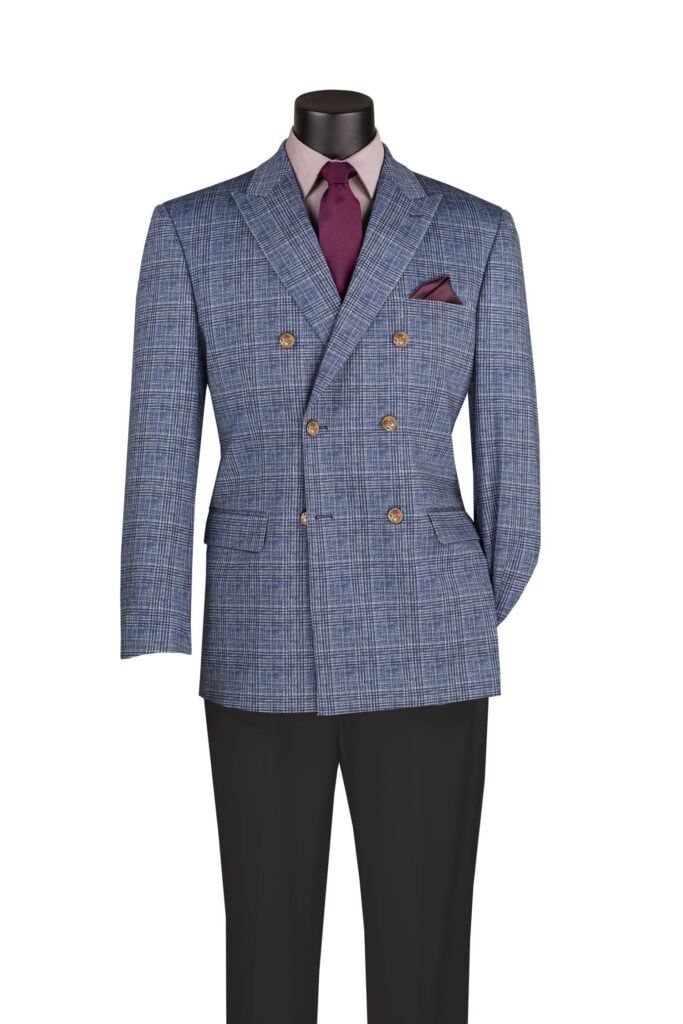
Three pieces, in order of importance: a jacket, a pair of trousers that aren't jeans, and a collared shirt. The jacket does ninety percent of the work. A man in a sport coat is dressed; a man without one is wearing clothes. If you own exactly one business casual piece, make it the jacket.
The Vinci poplin blazer is the right first jacket. Navy is the universal answer — it pairs with grey, tan, charcoal, and olive trousers without a second thought, and it's the color that reads as "I know what I'm doing" in every office in the country. At $119 it's also the cheapest way to look like you spent more. Burgundy or black are the second jacket once navy is handled; CCO's full sport coat collection covers everything from solid wool to patterned and textured options for the man who's past the basics.
Under the jacket, trousers in a color that isn't the jacket's. Charcoal or grey are the workhorses; tan and olive are the warm-weather and fall alternates. Flat front is the modern cut; pleated is the classic one, and both are correct — pick based on build, not trend. CCO's flat front dress pants and slim fit pants cover the range. The rule that matters: the trousers should fit the way suit pants fit, not the way jeans fit. If they're baggy, the whole outfit reads as lazy regardless of the jacket.
Then the shirt. This is where business casual gets interesting, because the tie is gone and the collar is doing the work the tie used to do. A standard point or spread collar in white or light blue is the safe call — see CCO's 100% cotton dress shirts. But the smarter move for business casual specifically is a banded collar shirt: no collar points, so there's no empty space where a tie should be. Under a blazer, a banded collar looks finished in a way an open point collar never quite does. It's the single most underused piece in business casual dressing, and it's the one GQ keeps putting on the cover without ever telling you why it works.
The cheat code: the suit as separates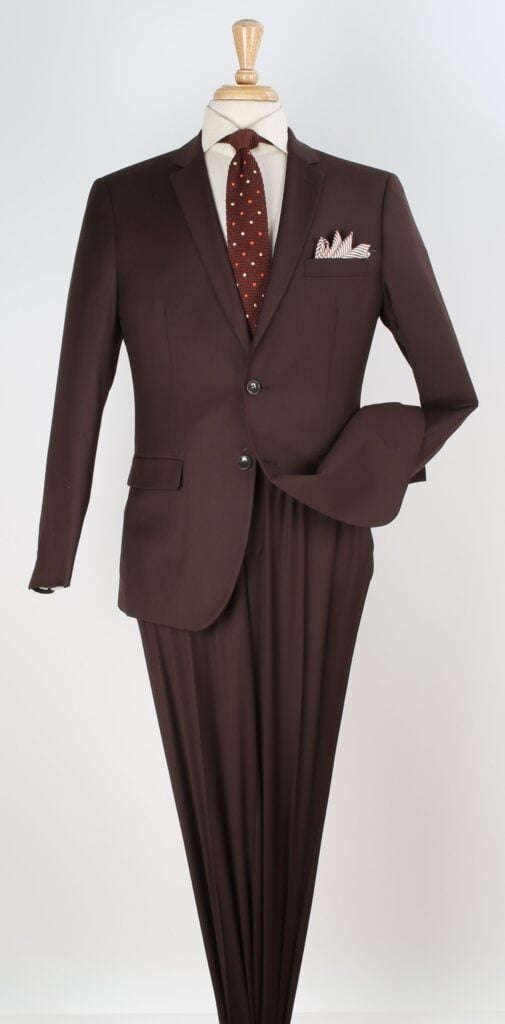
Here's what the magazines won't say because it's too practical: buy one solid-color suit in a modern fit and wear it as three outfits. Jacket and matching trousers with no tie — that's business casual at its most formal. Jacket with different trousers — that's the blazer-and-slacks look. Trousers with a sweater and no jacket — that's the Friday version. One purchase, a full week.
The SMB Couture executive 2-piece at $99 is built for exactly this. Modern fit, flat front, eighteen colors — and in navy, charcoal, or olive it splits into separates that look like they were bought separately. For the man who needs a business casual wardrobe by Monday and doesn't want to assemble it piece by piece, this is the answer.
Shoes: the part men get wrong most
 The fastest way to ruin a good business casual outfit is sneakers. Not because sneakers are wrong — in some offices they're fine — but because they drag the entire look down to their level. A blazer, dress trousers, and a banded collar shirt over white athletic sneakers reads as a man who ran out of time, not a man who made a choice.
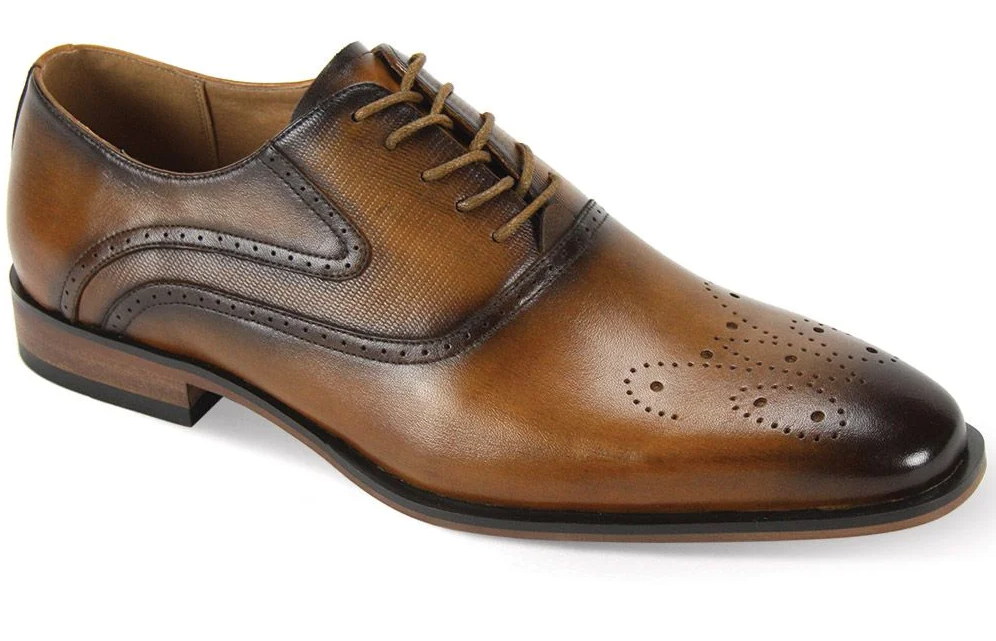
The right business casual shoe is one that could be worn with a suit but doesn't have to be. Loafers are the ideal — penny loafers, tassel loafers, a clean leather slip-on — because they're formal enough for the jacket and relaxed enough for the dress code. Browse CCO's leather shoes and dress shoes for the full range. For the office that genuinely sits at the casual end, the Brooklyn 718 mesh wingtip at $39 is the compromise that works: the wingtip detail keeps it in dress-shoe territory, the mesh construction keeps it comfortable through a nine-hour day. Natural or black.
Brown shoes with navy, grey, or tan trousers. Black shoes with charcoal or black. Match your belt to your shoes. That's the entire shoe rulebook.
What to leave at home
Short sleeve dress shirts under a jacket — the sleeves bunch and the look reads as discount. Polo shirts with a blazer — the collar collapses and it looks like you're trying to dress up a golf outfit. Jeans, unless your office has explicitly told you jeans are acceptable, and even then, dark and tailored only. Square-toed shoes of any kind. Anything with a visible logo. And the open-collar suit with no tie — the "funeral minus tie" look from the opening — unless the suit fits exceptionally well. A suit without a tie only works when the suit is sharp enough to carry it alone; most aren't.
Building the wardrobe in order
If you're starting from nothing, buy in this sequence. First, a navy blazer. Second, charcoal dress trousers. Third, two shirts — one white point collar, one banded collar in a color you like. Fourth, brown loafers. That's a complete business casual uniform for under $300 at CCO, and it covers four days a week on rotation. Fifth, the SMB executive suit in a color that isn't navy or charcoal — olive, burgundy, taupe — which adds a jacket, a trouser, and a full-suit option in one purchase. Sixth, a sweater for the days the jacket stays on the hook.
Business casual isn't hard. It's just never been explained as a system. Start with the suit, take one thing away, and wear shoes you could have worn with the suit. Everything else is detail.
Shop sport coats and blazers at CCO Menswear →
Free shipping on orders over $139.