
The Overcoat Is the Only Thing Anyone Sees All Winter. Here’s How to Choose One. | CCO Menswear
On the one garment that gets judged before you're through the door, how to choose length and fabric, the sizing mistake almost everyone makes, and five coats at CCO that get it right.
Every other piece of clothing a man owns is seen indoors, under control, in the context of the room. The overcoat is different. It's seen at the curb, in the parking lot, on the walk from the car, in the doorway while you're still taking it off. It's the first thing anyone notices and the last thing th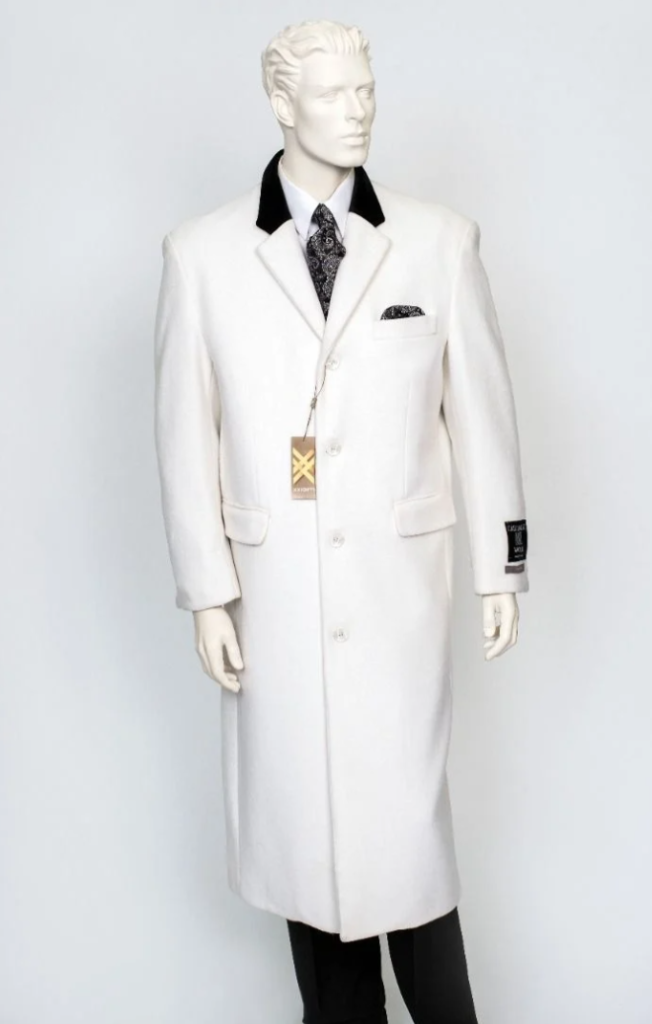 ey see when you leave. For five months of the year it is, functionally, the outfit — and most men treat it as an afterthought thrown over whatever they were already wearing.
That's the mistake. A suit under a bad coat is a bad outfit. A suit under a good coat is a man who thought about it. Here's how to get it right.
Topcoat, overcoat, car coat: what the words mean
The terms get used interchangeably, and in practice they describe the same garment at different lengths. An overcoat is the general category — a tailored coat worn over a suit or sport coat. A topcoat is technically a lighter-weight overcoat, though most retailers (CCO included) use "top coat" for the whole range. A car coat is the short one — mid-thigh, designed so a man could slide in and out of a driver's seat without sitting on a yard of wool. Full length means knee or below. Three-quarter length is the one in between, and it's the one most men should own first.
Length is the first decision
Three-quarter length — roughly 36 to 40 inches, landing a few inches above the knee — is the most versatile overcoat length there is. It covers a suit jacket completely, it moves easily, it works over a sport coat and over a sweater, and it doesn't swallow a shorter man. The Statement 3/4 length single breasted top coat is the reference piece here: 100% wool, notch lapel, three buttons, and seven colors that cover every suit a man is likely to own. Navy or charcoal is the first one to buy. Camel is the second, and the one that gets the compliments.
Full length — 50 inches and beyond — is the dramatic version. It reads as formal, it photographs like a film still, and it demands a certain amount of height and conviction to carry. The Apollo King full length top coat with banded wrists is the maximalist take: double breasted, 100% wool, 50-plus inches, in burgundy. At $89 it is one of the best-value pieces of outerwear on the site, and it's the coat for the man whose winter includes church services and evening events where arriving is part of the occasion.
Car coats — the short cut — are the practical choice for the man who commutes and wants a coat that stays out of the way. CCO's car coat collection covers the category.
"A suit under a bad coat is a bad outfit. A suit under a good coat is a man who thought about it."
Wool, cashmere blend, and what you're paying for
Pure wool is the standard, and for good reason: it's warm, it holds its shape, it takes a crease and releases it, and it survives a decade of winters with nothing more than dry cleaning and a good hanger. Every Statement top coat at CCO is 100% wool. It's the fabric to choose when durability matters more than softness.
A cashmere blend changes the hand of the fabric. Even five percent cashmere makes a coat noticeably softer and gives it a finer drape — the fabric moves more fluidly and reads as more expensive from a distance. The Vinci 3/4 length cashmere blend top coat is 70% wool, 25% viscose, 5% cashmere, 38 inches long, and $179 — the most accessible way to get the feel of cashmere without the price of it. Black, camel, or charcoal. The XXIOTTI full length cashmere blend pushes the blend higher — 10% cashmere — and adds a black velvet collar that makes the coat read as formal evening wear. Sixteen reviews at 98 percent. The winter white is the showpiece; the grey herringbone is the one that works every day. Browse CCO's cashmere coats for the full range.
The trade-off is care. Cashmere blends pill more readily and show wear at the cuffs and pockets sooner. A pure wool coat is the workhorse; a cashmere blend is the coat for the days the coat is the point.
Single breasted or double breasted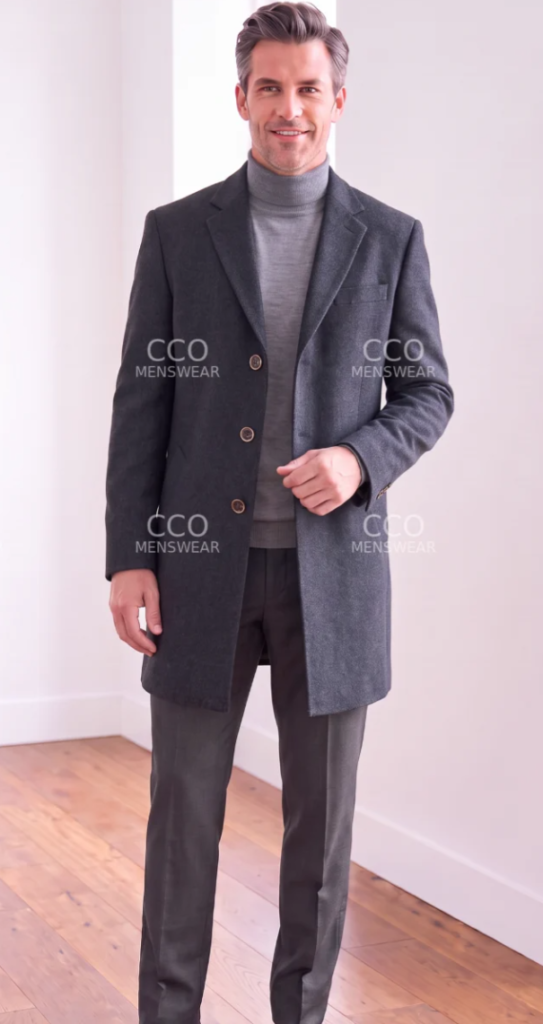
Single breasted is the default — one row of buttons, a clean line, and a coat that works open or closed, over a suit or over a sweater. It's the right first overcoat for almost everyone.
Double breasted is the statement. Two rows of buttons, a wider overlap, more structure through the chest, and a silhouette that looks like it belongs on someone important. It's less versatile — a double breasted coat looks wrong unbuttoned — but when the occasion is formal and the weather is cold, nothing else carries the same presence. The Apollo King full length above is the double breasted pick in this lineup.
Pattern, if you want it
Most men should own a solid overcoat before a patterned one. But a plaid coat over a solid suit is one of the better-looking combinations in cold-weather menswear — the coat carries the visual interest, the suit stays quiet underneath, and the whole thing reads as deliberate. The Statement 3/4 length plaid top coat — 100% wool, black or brown plaid — is the one to reach for when the solid is already handled. Wear it over charcoal, navy, or black. Never over another pattern.
The sizing rule nobody reads
This is where most online overcoat purchases go wrong. Overcoats are built oversized on purpose — they're designed to go over a suit jacket, and the manufacturer has already added the room. So when a man sees a coat and thinks "I'll size up to fit over my suit," he ends up with a coat that's two sizes too big. Every top coat at CCO carries the same instruction on the product page: order no larger than your regular suit jacket size. If you wear a 42 suit, order a 42 coat. The room is already there.
The other check is sleeve length: the coat sleeve should fully cover the suit jacket sleeve, with no jacket cuff showing. And the shoulder seam should sit at the end of your shoulder, not past it. Everything else — length, buttons, fabric — is preference. Those two are fit.
What to wear underneath
The overcoat does best over something structured. A suit is the obvious answer; a sport coat with dress trousers is the second. Over a sweater and dress pants it still works, particularly in the three-quarter length. Over a hoodie it does not, no matter how expensive the coat.
Color-match loosely, not exactly. A navy coat over a charcoal suit. A camel coat over a navy suit. A grey coat over almost anything. The coat and the suit should be in the same conversation without being the same color. Add a scarf in a solid tone, a wool hat if the weather calls for it, and leather shoes or boots — never sneakers under an overcoat, for the same reason you wouldn't wear them with the suit.
The order to buy in
First, a three-quarter length single breasted in navy or charcoal — the Statement at $249 or the Vinci cashmere blend at $179, depending on whether you want pure wool or a softer hand. That coat covers ninety percent of winter. Second, something with presence: the Apollo King full length double breasted at $89, or the XXIOTTI with the velvet collar if the evenings are formal. Third, the plaid, or a camel, once the basics are done and the coat is allowed to be the interesting part.
Winter is long. The overcoat is the only thing anyone sees for most of it. Buy accordingly.
Shop top coats at CCO Menswear →
Free shipping on orders over $139.